
Get notified on new travel guides
No spam, just Awesome San Miguel De Allende guides.
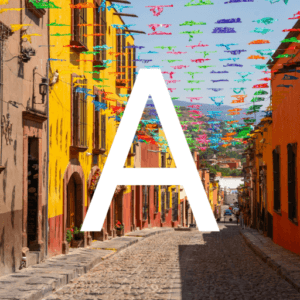
If there’s a city in Mexico that was built for photographers, it’s San Miguel de Allende. Every corner of this UNESCO World Heritage city presents a composition waiting to happen: candy-colored colonial facades, baroque church spires piercing impossibly blue skies, bougainvillea cascading over weathered stone walls, and the golden-hour light that turns everything amber and rose. It’s no wonder that San Miguel consistently ranks among the most photographed cities in Latin America.
This guide covers the best photography locations in San Miguel de Allende, organized by time of day, subject matter, and photographic style—from the iconic shots everyone wants to the hidden angles only locals know. Whether you’re using a professional DSLR, a mirrorless setup, or just your phone, you’ll leave with images that capture the magic of this extraordinary place.
No photography guide to San Miguel can skip the Parroquia—the pink neo-Gothic facade that has become the city’s visual signature. But getting a good photograph of it requires strategy. The plaza in front (Jardín Principal) is perpetually crowded, with tourists, vendors, and parked cars competing for space in your frame.
Best position: Stand at the southwest corner of the Jardín, near the portal arches. From here, the church fills the frame without the distraction of street-level clutter. Use a slightly elevated angle to avoid the heads of passersby.
Best time: The magic hour is roughly 6:00–7:00 PM, when the setting sun hits the Parroquia’s pink limestone and makes it glow. This “golden hour” effect on the facade is what you see on postcards—and it’s real, not Photoshopped. Morning light (7:00–8:30 AM) is also beautiful, with the added benefit of fewer people in the plaza.
Pro tip: For a unique angle, shoot the Parroquia reflected in the fountain at the Jardín’s center. You’ll need to get low—almost ground level—and use a wide aperture to blur the foreground water while keeping the reflection sharp.
San Miguel’s colonial architecture is a photographer’s playground. The city’s famous wooden doors—massive, centuries-old, with intricate ironwork and peeling paint in shades of turquoise, ochre, and terracotta—are subjects in themselves. The best concentration of photogenic doorways is along Calle Aldama and Calle Correo. Walk these streets early in the morning (before 9:00 AM) for soft light and zero competition for your composition.
For a broader architectural shot, climb to the rooftop of any restaurant or hotel near the center and shoot down into the canyon of callejones. The view from Quince Rooftop or Rosewood Hotel’s Luna Rooftop gives you a tapestry of terracotta roofs, church domes, and the purple Jacaranda trees (in bloom March–April).
The Mercado Ignacio Ramírez (the city’s main market) is a rich environment for street photography. The produce section bursts with color—pyramids of chiles, stacks of nopales, mountains of limes. The flower vendors create natural still lifes. Go between 9:00–11:00 AM when the light streams through the market’s high windows. Ask permission before photographing individual vendors; a smile and “¿Puedo tomar una foto?” goes a long way. Buying something small first helps.
The Fábrica La Aurora, a converted textile factory turned art and design center, offers a different kind of street photography: artists at work in their studios, gallery openings, industrial-meets-colonial interiors with raw brick walls and contemporary art.
San Miguel sits in a bowl of hills, and the elevated viewpoints produce spectacular panoramas. The classic spot is El Mirador—the official overlook at the top of Callejón del Chorro. Walk up from Centro through Parque Benito Juárez, and at the top you’ll find a plaza with a fountain offering the definitive San Miguel skyline shot. The Parroquia dominates the frame from here, surrounded by church domes and colonial rooftops. Sunrise is the best time—the sun rises behind you, illuminating the entire city in warm morning light. Sunset is beautiful too but much more crowded.
For an even higher perspective, the Charco del Ingenio botanical garden on the northern edge of town offers elevated views looking back toward the city across a dramatic canyon. The juxtaposition of desert landscape and colonial city in one frame is stunning. Go in the late afternoon for the best light.
For the ultimate San Miguel photograph, nothing beats the view from a hot air balloon. The flights launch at dawn and drift over the colonial center, offering a perspective that reveals the city’s organic, centuries-old layout. The geometric patterns of interior courtyards, the network of callejones, and the way the city nestles into the surrounding hills are only visible from above. Book a flight, bring a wide-angle lens, and be ready to shoot through the balloon basket’s openings.
A companion to our Instagrammable Spots guide, here are the best locations organized by photographic style:
San Miguel’s light changes dramatically through the day, and different times reward different subjects:
Beyond the obvious spots, several hidden gems reward photographers who seek them out. The Lavaderos del Chorro—the historic communal laundry basins below Parque Juárez—offer an architectural detail almost nobody photographs: a row of stone washing stations with water channels that date back centuries. The Templo de San Francisco, while well-known, has a side garden that almost nobody enters but which provides the best framing of the church’s bell tower through flowering trees.
The Biblioteca Pública (public library) on Insurgentes has a courtyard café where the morning light filters through a canopy of trees onto readers—a slice of daily San Miguel life that’s richer than any landmark shot. And the tiny Plazuela de la Soledad, tucked away from the tourist circuit, has weathered colonial walls and a quiet dignity that makes for powerful, less-reproduced images.
San Miguel rewards versatility. A wide-angle zoom (16–35mm) handles the narrow streets and sweeping rooftop views. A standard prime (35mm or 50mm) is perfect for street photography and doorways. And a telephoto (70–200mm) allows you to compress the layers of the city—church domes stacked behind each other, or street scenes where you want to compress the depth of a long callejón. If you only bring one lens, make it a 24–70mm zoom.
For phone photographers: San Miguel is incredibly phone-friendly. The narrow streets mean subjects are close, and the bright colors mean even phone sensors produce rich, saturated images. Use portrait mode for doorway shots, and the wide-angle mode for rooftop panoramas.
The Jardín Principal is essentially never empty during daylight hours. Strategies for crowd-free shots: arrive at sunrise (the plaza is yours until about 8:30 AM); use a tripod and neutral density filter for long exposures that blur moving people into ghostly streaks; or intentionally incorporate the crowds into your composition—a wedding party being photographed in front of the Parroquia can be more interesting than an empty plaza.
Drones are technically prohibited in San Miguel’s historic center without a permit from the Instituto Nacional de Antropología e Historia (INAH) and local authorities. The regulations are inconsistently enforced, but fines are steep. If you want aerial photography, the hot air balloon is your best legal option, or photograph from the natural elevated viewpoints like El Mirador.
June through September brings afternoon showers that can upend a photography day—but they also create spectacular conditions. Wet cobblestones reflect street lamps and neon signs at night, creating cinematic puddle-reflection shots. Storm clouds rolling over the hills behind the Parroquia make for dramatic skies. Bring a rain cover for your camera, and treat the rainy season as an opportunity rather than an obstacle. Some of the most evocative San Miguel photographs are taken in the moments just after a storm passes, when the streets are empty and the air is crystalline.
Several walking tours cater specifically to photographers, led by local photographers who know the best angles and the right times to be at each location. These are particularly valuable for street photographers who want guidance on approaching subjects respectfully. The Fábrica La Aurora also occasionally hosts photography workshops. For independent shooters, simply mapping the locations in this guide and spending a full day walking the route will yield a comprehensive portfolio.
San Miguel is not a museum—it’s a living, working city where people go about their daily lives. The golden rule of photography here: don’t treat locals as props. Always ask before photographing individuals, especially indigenous Otomí or Chichimeca women selling crafts, religious processions during Semana Santa, or families gathered in the plaza. A respectful approach—making eye contact, smiling, gesturing to your camera with a questioning expression—almost always gets a warmer response than surreptitious shooting from a distance. If someone says no, respect it instantly and move on. The street food vendors, mariachi musicians, and artisans who make the city visually rich are people with their own dignity, not set dressing for your travel album.
San Miguel rewards the photographer who slows down, looks up, and pays attention to details—the way light falls through a jacaranda tree onto cobblestones, how a painted wall fades from cobalt to sky blue over five centuries, the geometry of shadows cast by wrought-iron balconies. The grand shots will come easily. It’s the quieter moments that stay with you.
No spam, just Awesome San Miguel De Allende guides.
Leave a Comment
No comments yet. Be the first to drop one!