
Get notified on new travel guides
No spam, just Awesome San Miguel De Allende guides.
If you think San Miguel de Allende is magical any time of year, wait until you see it during the Christmas season. From mid-December through early January, this UNESCO World Heritage city transforms into a living nativity scene — cobblestone streets glow with farolitos (paper lanterns), church bells ring out across terracotta rooftops, and the smell of ponche (warm fruit punch) drifts from nearly every doorway. Christmas in San Miguel de Allende isn’t a tourist attraction — it’s a deeply felt community celebration that welcomes visitors into traditions stretching back centuries.
Unlike the commercialized holiday experience you’ll find in resort towns and big cities, San Miguel’s Christmas season revolves around posadas, pastorelas, and the rhythm of colonial religious traditions that feel both ancient and wonderfully alive. This guide covers everything you need to know — from what a posada actually is to where to eat Christmas dinner, what the weather’s like, and how to participate in the celebrations as a visitor.
Posadas are the heart of a Mexican Christmas, and San Miguel de Allende celebrates them with particular devotion. Running from December 16th through the 24th, these nine nightly processions reenact Mary and Joseph’s search for shelter (posada means “inn” or “lodging”) in Bethlehem. Each evening, a different neighborhood or church organizes a procession: participants carry candles and sing the traditional letanía — a call-and-response chant where the “pilgrims” outside beg for shelter and the “innkeepers” inside repeatedly refuse, until finally the doors open and everyone is welcomed in with food, drink, and a piñata for the children.
In San Miguel, the posadas organized by the Parroquia de San Miguel Arcángel (the iconic pink-stone church on the Jardín) are the largest and most spectacular. They typically begin at 7 PM and draw hundreds of participants. But the neighborhood posadas — particularly those in Colonia Guadalupe, Colonia San Antonio, and around the Oratorio de San Felipe Neri — offer a more intimate, local experience where visitors are genuinely welcomed.
Practical tip: You don’t need an invitation to join a posada procession — just show up at the starting point. Dress warmly (evenings dip into the 40s F/5-10°C in December), bring a candle, and be prepared to sing. The lyrics are printed on handouts distributed before the procession begins. Even if you don’t speak Spanish, the repetitive call-and-response structure is easy to follow.
San Miguel’s holiday season stretches well beyond December 25th. Here’s what to expect week by week:
The Christmas season officially kicks off on the Feast of the Virgin of Guadalupe, Mexico’s patron saint. Starting around midnight on December 11th, pilgrims arrive at churches throughout the city singing Las Mañanitas (the traditional Mexican birthday song). The Parroquia is the focal point, but smaller churches like the Templo de la Salud and the Santuario de Guadalupe also host beautiful, less-crowded celebrations. You’ll see children dressed in traditional indigenous clothing, mariachi bands performing in church atriums, and streets decorated with papel picado (cut-paper banners).
The nine nights of posadas (see above). Each night features a different organizing group. The most visually stunning is the posada organized by the Biblioteca Pública (Public Library) — their courtyard transforms into a candlelit wonderland, and the bilingual format makes it especially welcoming for English-speaking visitors. Check the library’s bulletin board on Insurgentes for exact dates and times.
Christmas Eve — not Christmas Day — is the main celebration in Mexico. The evening begins with the final and most elaborate posada, then transitions to the Misa de Gallo (Midnight Mass, literally “Rooster’s Mass”) at the Parroquia. Arrive by 10 PM if you want a seat — by 11 PM, the church overflows into the Jardín.
After Mass, families return home for the main Christmas meal, typically served well past midnight. If you’re visiting without family connections, several restaurants offer special Nochebuena dinners (see the dining section below). The Jardín remains lively until the early morning hours, with street vendors selling buñuelos (crispy fried pastries), tamales, and atole (warm corn-based drink).
Christmas Day in San Miguel is quiet — gloriously so. Streets are nearly empty in the morning as families sleep in after Nochebuena celebrations. Most shops and restaurants are closed. This is the perfect day for a peaceful walk through the city, visiting the churches while they’re empty of crowds, or taking in the views from El Mirador. For lunch, a few hotel restaurants remain open — call ahead to confirm. By evening, the Jardín comes back to life with families strolling and children showing off new toys.
Mexico’s version of April Fools’ Day falls during the Christmas season. Expect playful pranks and jokes — don’t lend anything today, as tradition says anything borrowed won’t be returned. It adds a lighthearted interlude to the religious observances.
While Santa Claus has made inroads in Mexico, the traditional gift-giving day is January 6th, when the Three Kings bring presents to children. The highlight is the Rosca de Reyes — a ring-shaped sweet bread decorated with candied fruit, with a small plastic baby Jesus figurine hidden inside. Whoever finds the figurine in their slice must host a tamales party on February 2nd (Día de la Candelaria). Bakeries throughout San Miguel sell roscas starting January 4th; Panadería La Buena Vida on Canal Street and Petit Four on Mesones make particularly excellent ones — order ahead.
The holiday season in San Miguel is a feast — and we don’t mean metaphorically. Specific foods appear only during this time of year, and tracking them down is one of the great pleasures of a Christmas visit.
For a deeper dive into where to eat generally in San Miguel, check out our best restaurants guide and street food guide for year-round recommendations.
Most San Miguel restaurants close on Christmas Eve and Christmas Day, but several excellent ones offer special holiday menus. Reservations are essential — book by early December or you’ll be eating tamales from a street cart (which, honestly, isn’t the worst backup plan).
For more dining recommendations year-round, see our complete restaurant guide.
San Miguel de Allende is one of Mexico’s premier destinations for artisan shopping, and the Christmas season brings out the city’s best. Skip the generic souvenirs and look for these uniquely San Miguel gifts:
For a comprehensive look at San Miguel’s shopping scene, see our complete shopping guide.
San Miguel sits at 6,200 feet (1,900 meters) above sea level, which means December days are gloriously sunny and warm (70–75°F / 21–24°C) while evenings and early mornings are genuinely cold (38–45°F / 3–7°C). The temperature swing can be 30°F in a single day.
Packing essentials for Christmas in San Miguel:
Hotels and vacation rentals in San Miguel typically don’t have central heating. Most rely on fireplaces (often gas, sometimes wood) and space heaters. When booking your accommodation, confirm that heating is available — fireplaces are charming, but you’ll want backup heat for those 40-degree mornings. Browse our boutique hotels guide for accommodation ideas.
Accommodation during the Christmas season books months in advance — San Miguel is a popular holiday destination for both international visitors and Mexicans from larger cities. If you’re planning a December trip, start looking at hotels by September at the latest.
For the most atmospheric Christmas experience, stay within walking distance of the Jardín Principal. The historic center is where all the action happens — the posadas, the Mass, the street festivities. Hotels on or near the Jardín (like the Belmond Casa de Sierra Nevada or Hotel Matilda) put you steps from everything but come at a premium. Boutique hotels in the Colonia Guadalupe and Colonia San Antonio neighborhoods offer a quieter base while still being a 10–15 minute walk from the center.
For a comprehensive look at where to stay, see our guides to boutique hotels and Airbnb vs hotels in San Miguel de Allende.
What makes Christmas in San Miguel de Allende special isn’t any single event — it’s the way the entire city participates. In an era when Christmas has become increasingly commercial in much of the world, San Miguel’s celebrations remain stubbornly, wonderfully communal. The posadas aren’t performances put on for tourists; they’re neighborhood traditions that have been passed down through generations and that visitors are simply invited to join.
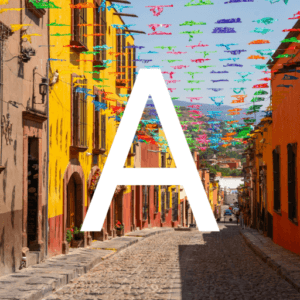
The colonial architecture provides a backdrop that no shopping-mall Santa could compete with: 18th-century churches glowing with candlelight, cobblestone streets strung with farolitos, fireplaces crackling in centuries-old courtyards. It’s Christmas as a sensory experience — the smell of ponche and woodsmoke, the sound of villancicos (Christmas carols) echoing off stone walls, the warmth of a borrowed rebozo when the evening chill sets in.
If you’re considering when to visit San Miguel de Allende, the Christmas season offers something the summer months can’t: a chance to experience the city at its most authentic, when tourism takes a backseat to tradition and the community’s shared rituals take center stage. For first-time visitors, we recommend reading our first-time visitor’s guide to plan the rest of your trip. If you’re interested in other festivals, check out our guide to the Festival de la Calaca and Day of the Dead celebrations.
And when you’re standing on the Jardín at midnight on Nochebuena, surrounded by candlelight and the sound of a thousand voices singing, with the Parroquia’s pink spire glowing above you — you’ll understand why so many visitors end up returning to San Miguel for Christmas year after year.
No spam, just Awesome San Miguel De Allende guides.
Leave a Comment
No comments yet. Be the first to drop one!